

Best Age for a Facelift: What Doctors Actually Recommend
If you’ve been wondering about the best age for a facelift, you’re not alone. It’s one of the most common questions asked during consultations at Dr. Andrew Frankel’s Beverly Hills practice, and one of the hardest to answer with a simple number. The truth is, there’s no single right age. What matters more is where you are in your aging process, what’s bothering you, and what you’re hoping to achieve.
Key Takeaways: The Best Age for a Facelift
- There is no universally “perfect” age for facelift surgery; candidacy depends on the individual, not a number.
- Dr. Frankel’s published research shows the average facelift patient is in their early 50s, with results lasting nearly 11 years on average.
- Patients who undergo facelift surgery at 53 or younger tend to enjoy longer-lasting results than those who wait.
- Facelift surgery can be combined with procedures like blepharoplasty or a brow lift to address aging across multiple areas at once.
- A personalized consultation with a facial plastic surgeon is the only reliable way to determine whether the timing is right for you.
Age Alone Is Not the Right Answer
The question isn’t really “how old do I have to be?” It’s “am I ready?” And those are two very different things.
Everyone ages differently. Genetics, sun exposure, skin elasticity, lifestyle habits, and facial anatomy all shape how and when the signs of aging appear. Some patients in their early 40s present with significant laxity and structural change that makes facelift surgery a reasonable consideration. Others in their late 50s still have enough tissue support that less invasive procedures are the better path.
Dr. Frankel, a double board-certified facial plastic surgeon in Beverly Hills who has performed facelift surgery for more than 30 years, puts it plainly: there is no perfect age. What a surgeon is really evaluating is the relationship between what’s bothering you, what your anatomy can support, and what surgery can realistically deliver. Chronological age is one data point among many.
Signs That Indicate You May Be Ready
Rather than a number, the more useful question is whether certain changes have become noticeable enough to bother you. Some of the most common signs that patients are ready to explore facelift surgery include:
- Skin laxity along the jawline and neck that doesn’t respond to non-surgical treatments
- Jowling that softens or obscures the definition of the jaw
- Deepening folds between the nose and mouth
- Loss of youthful contours in the midface and cheeks
- A general heaviness or tired quality to the face that isn’t reflective of how you feel
If dermal fillers, skin tightening, or other less invasive procedures are no longer producing satisfying results, that’s often a signal that structural change has progressed to the point where surgery is worth a serious conversation.
What Research Shows About Facelift Surgery Timing
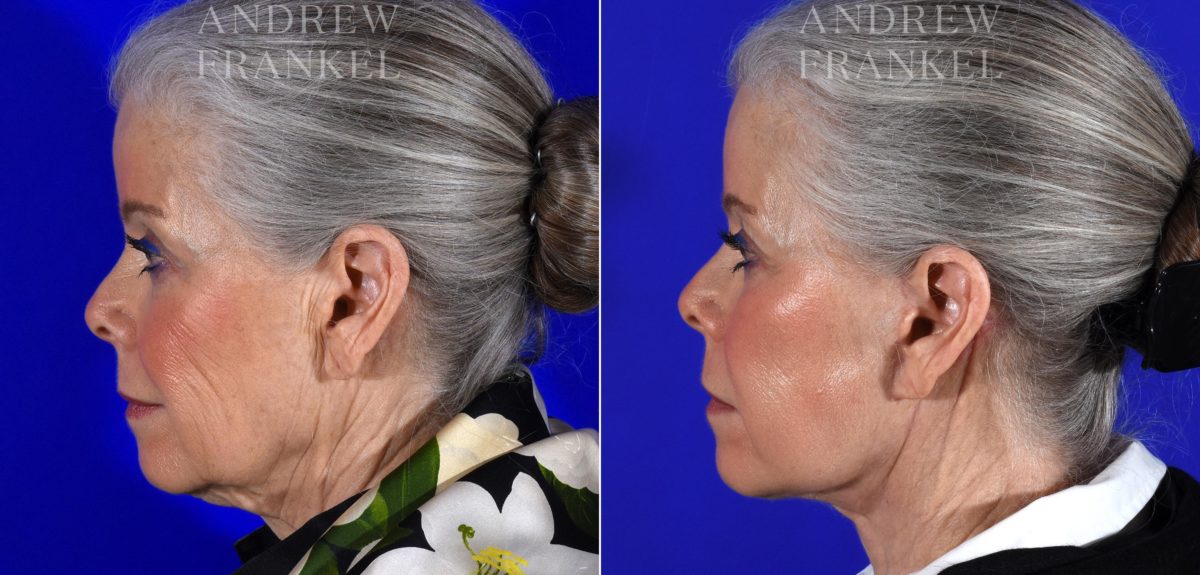
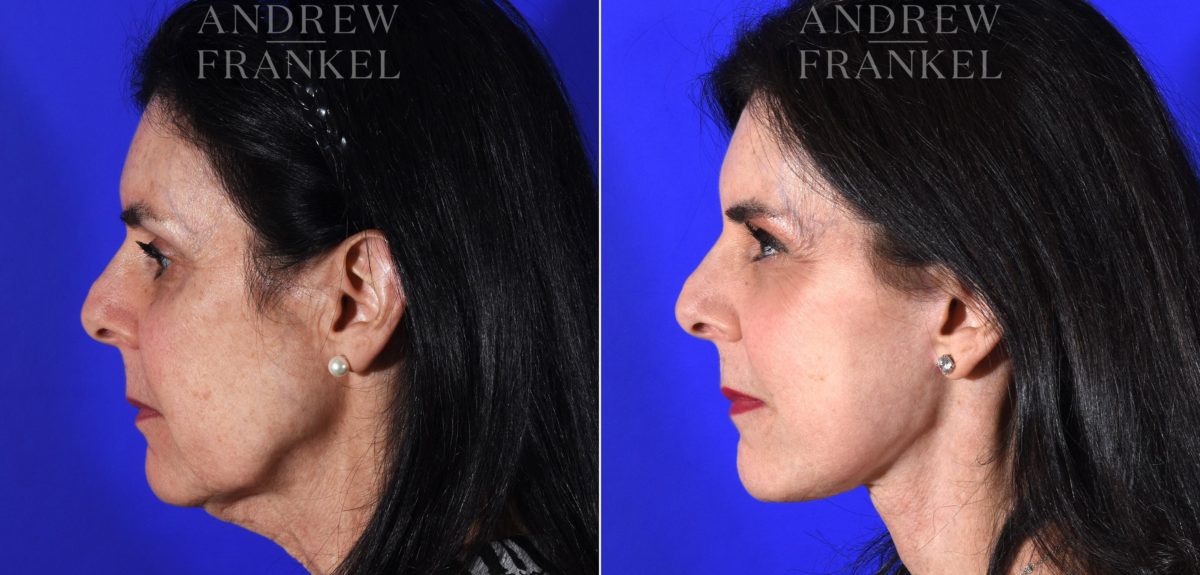
One of the most useful data points on facelift timing comes from Dr. Frankel’s own published research. In a peer-reviewed study spanning 30 years of his Beverly Hills practice, Dr. Frankel and co-author Dr. Marc Levin analyzed outcomes from 93 revision facelifts to understand how long deep plane facelift results actually last.
The average age of patients at the time of their initial facelift was 53.5 years. Across all patients, the mean interval before returning for revision surgery was 10.9 years. But one of the most clinically meaningful findings was the difference in longevity based on the age at which patients had their first procedure.
Patients who had their initial facelift at age 53 or younger returned for revision surgery an average of 12.4 years later. Those who were older than 53 at the time of their first surgery returned after 9.3 years. As Dr. Frankel explained in a recent interview: “If you are on the fence and you’re questioning whether you should wait so that you’re not considering a second one early in your life, that really doesn’t hold up. You might as well get to it and enjoy the moment.”
The implication is clear. Waiting does not necessarily protect you from needing a second procedure sooner. In many cases, patients who act earlier enjoy longer-lasting results and spend more of their lives looking the way they want to look.
How Aging Looks at Different Ages
Understanding what typically happens to facial structure over time can help put timing in context.
In Your 40s

For most patients, the early 40s bring the first noticeable structural changes. Skin elasticity begins to decline, the fat pads of the midface start to shift downward, and the jawline may soften. Wrinkles that were once dynamic start to linger. For many patients in this age group, non-surgical treatments or a mini facelift may still be appropriate. Some, however, particularly those with earlier or more pronounced facial aging, may be reasonable facelift candidates in their late 30s or early 40s. The late 30s and early 40s are also when preventive thinking about facial aging starts to make practical sense.
In Your 50s
The early 50s represent the most common window for a first facelift, and for good reason. Structural changes have typically become significant enough that surgery offers clear benefits, but tissue quality is still favorable, healing tends to be reliable, and results tend to last. Jowling is more defined, neck laxity becomes more apparent, and the midface often shows meaningful volume redistribution. For patients in their early 50s considering a full facelift, the research strongly supports acting rather than waiting.
In Your 60s
Patients in their 60s remain excellent candidates for facelift surgery, and many achieve beautiful, natural-looking outcomes. The considerations are similar, though tissue quality and skin elasticity may require a more individualized assessment. Recovery may take slightly longer, and expectations should be calibrated accordingly. The goal is still natural rejuvenation, not reversal of the clock by decades.
How Modern Facelift Techniques Change the Conversation
Not all facelifts are created equal, and the technique a surgeon uses has a direct bearing on how long results last and how natural they look. Dr. Frankel performs the deep plane facelift as his primary technique, and in a recent interview he explained the core difference between the two dominant approaches:“We could break facelift techniques into two major categories. One would be lifts that involve elevating the skin up first and then manipulating a connective tissue layer called the SMAS separately. And in a deep plane lift, you don’t elevate the skin up. You do the entire dissection deep underneath that SMAS layer. The deep plane has objective evidence that suggests it lasts longer than any of these SMAS lifts.”
The practical difference for patients is significant. SMAS-based techniques that operate on a single isolated area of connective tissue can, over time, create an unnatural pulled appearance. As Dr. Frankel noted, certain SMAS approaches can result in “a little bit of pulling by the corners of the mouth” and, as tissues continue aging, a “windswept appearance” that signals surgery rather than concealing it.
Why the Deep Plane Delivers More Lasting Results
The deep plane approach works differently. By working beneath the SMAS and platysma as a composite unit and releasing the retaining ligaments of the face, the technique lifts tissues holistically, addresses the midface, jawline, and neck simultaneously, and produces results that age more gracefully over time. Dr. Frankel’s published research supports this: patients who underwent deep plane facelifts in his practice waited an average of nearly 11 years before seeking revision, compared to 8 years reported in comparable studies of SMAS-based techniques.
Revitalize with Dr. Frankel
Step into a world where beauty blends with science, and let Dr. Frankel guide you to a refreshed, youthful appearance.
Personalized Evaluation Matters
Facelift surgery rarely exists in isolation. For many patients, the most satisfying outcomes come from addressing multiple areas of facial aging at once, and a skilled facial plastic surgeon will help you understand which combination makes sense for your anatomy and goals.
Blepharoplasty
A facelift addresses the midface, jawline, and neck, but leaves the eye area untouched. Blepharoplasty corrects drooping upper eyelids and under-eye bags, and is one of the most common procedures combined with facelift surgery for a more complete, balanced rejuvenation.
Brow Lift
When the forehead and brow have descended, a facelift alone may leave the upper face looking heavy or tired. A brow lift restores a more open, rested appearance to the upper face and works in harmony with facelift results.
Midface Lift
The midface ages differently than the lower face and neck. For patients with significant cheek descent or flattening of the cheek contour, a midface lift can address changes that extend beyond the reach of a standard facelift.
Neck Lift
While a facelift improves the upper neck, some patients present with more advanced neck banding or skin laxity that benefits from a dedicated neck lift. Combining the two procedures allows for more thorough and cohesive rejuvenation of the lower face and neck together.
Fat Transfer
Facial aging involves not just sagging and laxity but volume loss. Fat transfer restores fullness to areas like the cheeks and temples that have hollowed over time, complementing the lifting and tightening effects of facelift surgery for a more naturally youthful result.
These combinations are not about doing more surgery for its own sake. They are about addressing the full picture of what has changed so that results look cohesive and natural rather than selectively addressed.
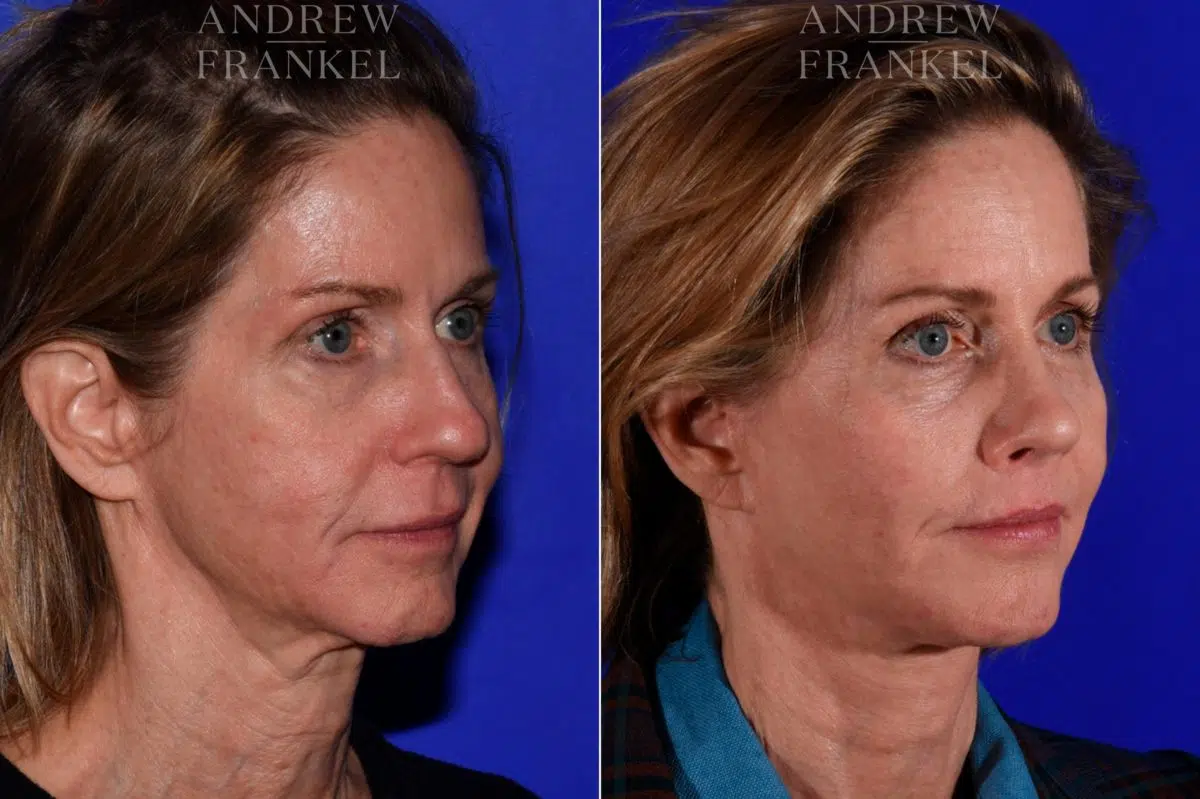
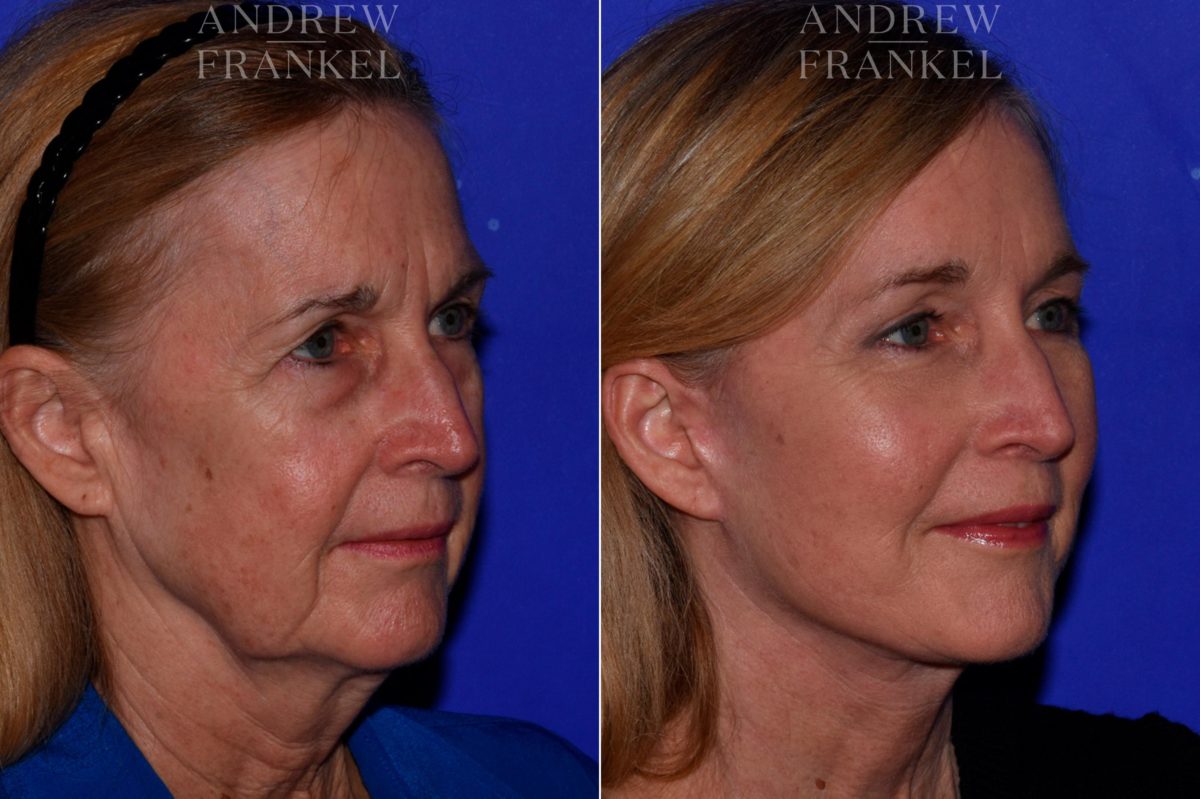
Schedule a Consultation in Beverly Hills
If you’ve been thinking about facelift surgery and wondering whether now is the right time, the most useful next step is a conversation with a surgeon who can evaluate your anatomy, discuss your goals, and give you an honest assessment of what surgery can and cannot do for you.
Dr. Andrew Frankel is a double board-certified facial plastic surgeon who has maintained a boutique practice in Beverly Hills for more than 30 years. His practice focuses exclusively on the face and neck, and his published research on deep plane facelift longevity offers patients an evidence-based foundation for understanding what to expect. Contact the practice today to schedule a consultation.
Frequently Asked Questions About Facelift Timing
About Dr. Andrew Frankel
Andrew S. Frankel, M.D., F.A.C.S. is a double board-certified facial plastic surgeon based in Beverly Hills, California, with more than 30 years of experience performing facelift surgery and other facial procedures. His practice focuses exclusively on the face and neck.
- Education: Graduated with Alpha Omega Alpha honors from the University of Illinois, Abraham Lincoln School of Medicine
- Residency: Five-year Otolaryngology residency at the University of Illinois Eye and Ear Infirmary, specializing in surgery of the head and neck
- Fellowship: One-year fellowship in facial plastic and reconstructive surgery under internationally acclaimed surgeon Frank Kamer, completed under the auspices of the American Academy of Facial Plastic and Reconstructive Surgery
- Board certifications: Facial Plastic and Reconstructive Surgery and Otolaryngology–Head and Neck Surgery
- Academic appointments: Clinical faculty at the University of California Los Angeles and the University of Southern California Keck School of Medicine
- Research: Principal investigator on two landmark FDA clinical trials; co-author of a peer-reviewed 30-year study on deep plane facelift longevity published in Facial Plastic Surgery & Aesthetic Medicine
- Professional memberships: Fellow of the American College of Surgeons; active member of the American Academy of Facial Plastic and Reconstructive Surgery and the American Academy of Otolaryngology–Head and Neck Surgery; Fellowship Director for one of fewer than 40 accredited Fellowship Programs in the country