

Jawline Contouring Surgery Recovery: What to Expect Step by Step
Refining the chin and jawline can bring balance and definition to the entire face. Dr. Andrew Frankel offers advanced surgical techniques for jawline contouring, including chin implants, removal of fat from the deep neck, and platysma plication—each designed to refine different aspects of the lower face and neck. Each of these surgical options targets a different aspect of the lower face and neck to create a more sculpted, harmonious appearance.
If you’re planning jawline contouring surgery with Dr. Frankel in Beverly Hills, understanding what to expect during recovery helps you prepare physically and mentally for a smooth process and confident results.
Quick Insights on Jawline Contouring Recovery
- Recovery involves temporary swelling, bruising, and gradual improvement over several weeks.
- Each technique—chin implant, submental liposuction, partial removal of the salivary glands, or platysma plication—has a slightly different timeline.
- Following post-operative care closely supports better, longer-lasting results.
- Dr. Frankel’s extensive experience in facial plastic surgery enhances both safety and aesthetics.
- Early communication with your surgeon is key if anything feels unusual during healing.
The Surgical Jawline Contouring Procedures
Dr. Frankel performs a range of facial plastic surgery procedures, including techniques that sculpt and refine the chin and jawline for improved definition and balance. Depending on each patient’s anatomy and goals, his approach may involve one or a combination of techniques such as chin implants, submental liposuction, and platysma plication to enhance facial balance and definition. Occasionally, these techniques must be done in conjunction with procedures that also tighten the skin, such as facelifting, to achieve optimal results.
Chin Implants (Chin Augmentation)
This procedure enhances projection and balance by placing a small, custom-fit silicone implant through an incision beneath the chin. The implant integrates with the natural jawline to improve structure and proportion.
Submental Liposuction (Neck Fat Removal)
Through a small incision under the chin, Dr. Frankel removes excess fat from the submental area to sharpen the jawline and reduce the appearance of a double chin. This technique refines the contour of the neck and lower face without altering bone structure.
Platysma Plication (Neck Muscle Tightening)
When vertical neck bands or loose skin affect the jawline’s definition, tightening the underlying platysma muscles can restore a smoother, more youthful contour. This approach is often combined with liposuction or chin augmentation for comprehensive results.
Deep Neck Work
For patients whose neck fullness comes from deeper structures rather than just superficial fat, Dr. Frankel may recommend deeper anatomical refinement. This can include removal of subplatysmal fat, partial excision of the submandibular glands, selective shaving or tightening of deeper neck muscles, and releasing fascial attachments to the hyoid bone to improve the cervicomental angle. These steps address deeper contributors to neck heaviness and create a more defined jaw-neck transition. Although performed at a deeper level, these techniques follow the same postoperative course as the other jawline contouring procedures and do not require a separate recovery timeline.

Botox to the Mentalis Muscle
While not a surgical procedure, Botox injections to the mentalis muscle can help refine the look of the chin when muscle activity contributes to dimpling, tightness, or a “cobblestone” texture. For some patients, this can be a standalone option to smooth the chin surface and subtly enhance lower-face balance without surgery. In many cases, even when surgical jawline contouring is performed, treating the mentalis muscle is an important adjunct that helps the final result appear smoother and more defined by reducing unwanted muscle pull on the chin. Because this treatment is non-invasive, there is typically little to no recovery or downtime, and Dr. Frankel will advise on whether and when it should be included in your treatment plan.
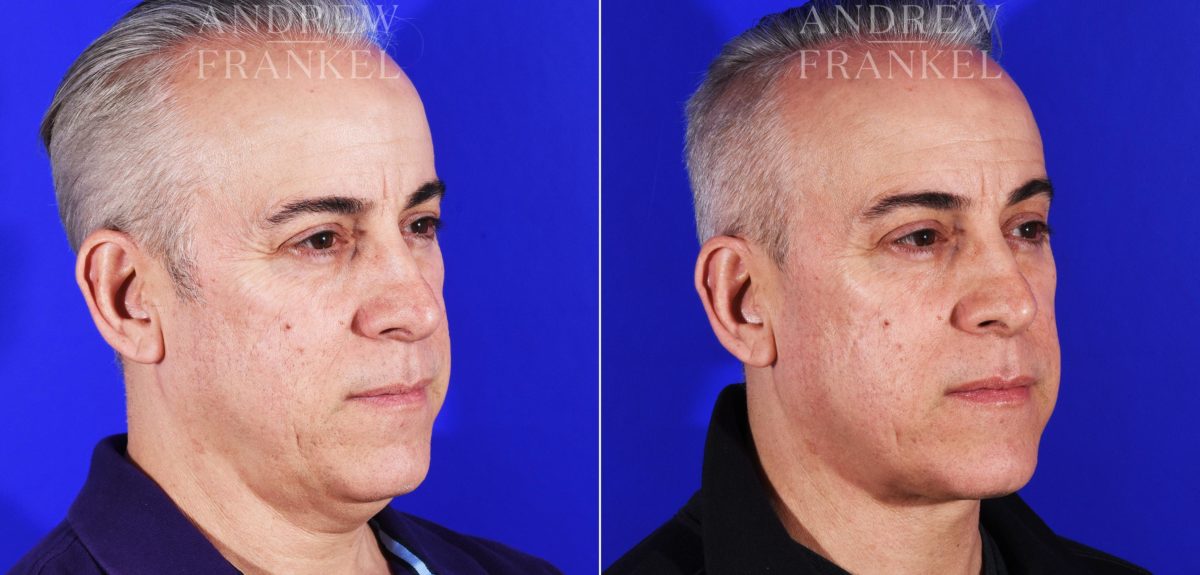
Step-by-Step Jawline Surgery Recovery
While each patient heals at their own pace, most follow a predictable pattern of recovery. Below are typical timelines and expectations for each procedure.
Chin Augmentation Recovery Timeline
Days 1–3: Swelling and bruising peak during this time. Keeping your head elevated and applying cold compresses help control inflammation. Mild discomfort and tightness are normal.
Days 4–7: Swelling begins to subside, and most patients can move around more comfortably. Non-resorbable sutures may be removed around one week after surgery.
Weeks 2–3: You’ll start to see early improvement in facial balance. Swelling continues to decrease, and you may return to work or light social activities.
Weeks 4–6: Most residual bruising is gone. Avoid strenuous activity until Dr. Frankel clears you. Some temporary numbness or firmness may persist.
Months 3–4: The implant settles into its final position, and the new contour appears natural and harmonious with the rest of the face.


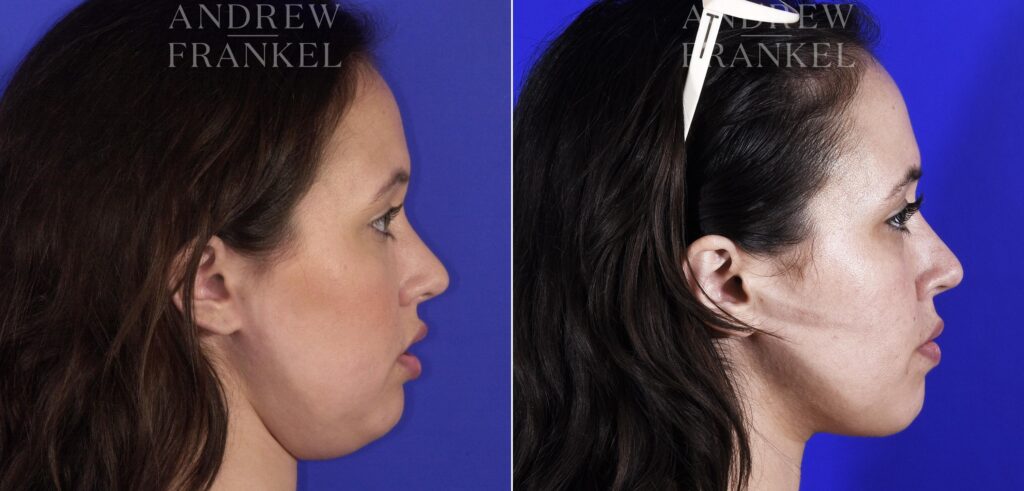
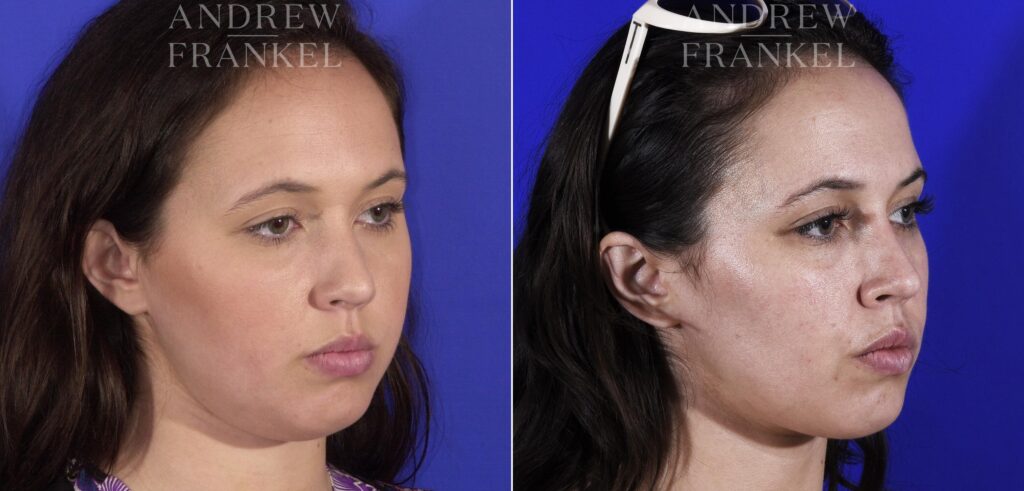
Submental Liposuction Healing Process
Days 1–3: The treated area may feel firm or tender. Wearing a soft, supportive chin strap or facial compression garment helps limit swelling and supports a smooth, refined contour as the area heals.
Days 4–7: Bruising fades from the neck and under-chin area. Light activity such as normal walking is encouraged to promote circulation, but avoid heavy lifting or strenuous exercise.
Weeks 2–3: Most patients can resume light work and normal daily routines. Swelling continues to decrease.
Weeks 4–6: The jawline begins to look more refined as tissues adapt. Dr. Frankel may recommend gentle massage or skin care for smoother results.
Months 2–3: Final contour appears. Skin continues tightening naturally over the refined structure.
Platysma Plication Recovery
Days 1–4: A feeling of tightness is common, especially when moving the neck. Keep your head elevated and limit motion to protect the repair.
Days 5–10: Bruising continues to fade, and sutures may be removed if needed. Continuing to wear your chin strap or compression wrap as directed supports proper healing and maintains the refined contour.
Weeks 2–3: You can gradually resume light activity, though some stiffness or pulling may continue.
Weeks 4–6: The neck muscles strengthen, and the improved jaw-neck transition becomes visible.
Months 2–3: Full soft-tissue settling and symmetry are achieved as swelling resolves.
Estimated Recovery Timelines
| Procedure | Light Activity | Full Activity | Noticeable Swelling |
| Chin implant | 3–5 days | 3–4 weeks | 6–8 weeks |
| Submental liposuction | 2–3 days | 2–3 weeks | 3–6 weeks |
| Platysma plication | 5–7 days | 3–4 weeks | 6–8 weeks |
Why Choose Dr. Andrew Frankel in Beverly Hills?
Dr. Frankel is double board-certified in Facial Plastic and Reconstructive Surgery and Otolaryngology–Head and Neck Surgery, bringing decades of experience refining facial balance and harmony. His practice in Beverly Hills is dedicated exclusively to facial procedures, offering meticulous planning, advanced surgical techniques, and attentive postoperative support. Patients appreciate his calm approach, emphasis on natural results, and deep understanding of facial anatomy.
Revitalize with Dr. Frankel
Step into a world where beauty blends with science, and let Dr. Frankel guide you to a refreshed, youthful appearance.

What Affects Jawline Surgery Recovery
Every patient’s healing experience varies based on factors like age, skin elasticity, overall health, and whether procedures are combined. Closely following aftercare instructions, avoiding smoking and alcohol, and keeping your head elevated can all influence how quickly and comfortably you heal.
Good post-surgery habits further support recovery. Limiting salt intake helps minimize swelling, and maintaining light activity such as walking promotes circulation. Keeping incision sites clean, following dressing instructions carefully, and avoiding unnecessary neck or jaw movement are key to optimal results. Most patients notice steady improvement each week as swelling subsides and contours refine.
Essential Do’s and Don’ts During Recovery
Do’s
- Sleep with your head elevated to minimize swelling.
- Apply cold compresses as recommended.
- Take medications as prescribed and finish antibiotic courses if provided.
- Attend all follow-up appointments to monitor healing progress.
- Stay hydrated and eat balanced meals to support tissue repair.
- Wear your compression garment as instructed.
Don’ts
- Avoid bending forward, lifting heavy objects, or straining during the first few weeks.
- Do not smoke or drink alcohol, as these slow healing.
- Skip unapproved medications such as aspirin or herbal supplements that can thin the blood.
- Avoid sun exposure or heat on the treatment area.
- Refrain from massaging or touching incisions without medical clearance.
When to Contact Your Surgeon
Normal healing includes mild soreness, bruising, and temporary numbness. However, contact Dr. Frankel’s office immediately if you notice:
- Increasing pain after the first few days
- Redness or warmth around incisions
- Sudden swelling on one side of the face or neck
- Fever above 100.4°F (38°C)
- Drainage or pus at incision sites
- Persistent numbness or changes in skin sensation
Prompt communication ensures that any complication is addressed early, supporting the safest and best possible outcome.
Choosing the Right Treatment for You
The ideal jawline contouring plan depends on your facial structure and the specific concerns you want to address. Chin augmentation enhances projection and balance. Submental liposuction removes unwanted fat that hides the jaw’s definition. Platysma plication tightens underlying muscles for a smoother neck. During your consultation, Dr. Frankel evaluates your anatomy and recommends the right combination for long-lasting, natural results.

Non-Surgical Options vs. Surgery
While nonsurgical treatments can help refine chin and jawline contours, they work differently than surgery. Fillers can add subtle volume or shape, and Botox can relax chin muscles that contribute to dimpling or uneven texture. These approaches can be effective for patients seeking improvement without incisions or downtime.
Surgical options — such as chin implants, submental liposuction, and platysma tightening — provide more structural and longer-lasting changes. In your consultation, Dr. Frankel will evaluate your anatomy and goals to determine whether a nonsurgical approach, a surgical procedure, or a combination will give you the best result.
Benefits of Surgical Jawline Contouring
- Enhances facial symmetry and proportion
- Defines the neck and jawline without fillers
- Reduces fullness beneath the chin
- Improves confidence and profile aesthetics
- Provides long-lasting, structural improvement tailored to each individual face
Consultation and Next Steps
Every successful jawline contouring recovery begins with thoughtful planning. During your private consultation in Beverly Hills, Dr. Frankel will discuss your goals, evaluate your facial proportions, and create a surgical plan tailored to you. His team provides detailed pre- and post-operative instructions to ensure a safe, predictable, and rewarding recovery.
A Smooth Recovery Leads to Lasting Results
Jawline contouring surgery recovery is a gradual but rewarding process. As swelling fades and definition sharpens, you’ll see a stronger, more balanced profile that complements your entire face. With Dr. Andrew Frankel’s expertise and guidance, patients in Beverly Hills and Los Angeles can feel confident from consultation to full recovery.