

Revision Rhinoplasty Recovery: What to Expect Week by Week
If you are planning a second nose surgery, the question I hear most is some version of, “How long until I look like myself again?” Revision rhinoplasty recovery has its own rhythm, and it does not always match what people remember from their first operation. How much downtime you face depends a great deal on how much is being corrected, and for many patients a revision is no harder to recover from than their first surgery. Knowing what each stage looks like takes a lot of the worry out of it.
I’m Dr. Andrew Frankel, a double board-certified facial plastic surgeon in Beverly Hills, and for more than twenty-five years my work has focused entirely on the face and neck. A good portion of the rhinoplasties I perform are revisions, frequently for patients who have already had two or three procedures elsewhere. That experience has taught me that recovery feels far smoother when you know what is normal at each point.
What Your Revision Rhinoplasty Recovery Timeline Looks Like at a Glance
- How much recovery you face depends on the extent of the revision, from a small refinement to a larger rebuild with grafts.
- The first week brings the most swelling and the splint, but the hardest part passes quickly.
- Most of the visible bruising and swelling settle during the first month.
- Your nose keeps refining for a year or more, especially around the tip.
- Choosing an experienced revision surgeon is the single biggest factor in a smooth recovery.
Why Revision Rhinoplasty Recovery Is Different
A primary rhinoplasty works with untouched tissue. A revision does not. By the time someone comes to me for a second or third operation, the nose carries scar tissue from earlier surgery, the cartilage supply may be limited, and the anatomy has already been changed. To rebuild support, I often use cartilage grafts, sometimes harvested from the ear or the rib. All of this means the healing tissues may need more time to settle.
Revision work is also more common than most people assume. Rhinoplasty remains the most requested surgical procedure in facial plastic surgery, and the AAFPRS reports that about eighty percent of its surgeons say more than ten percent of their rhinoplasty patients come in seeking a revision of an earlier surgery. The same group notes that looking natural is now the top concern patients bring in with them, and that preference shapes how I approach every revision.
The First 24 Hours After Revision Surgery
You will leave surgery with a small splint on the bridge and, in some cases, soft internal support. Most patients feel groggy from anesthesia for the rest of that first day, so plan to rest, keep your head elevated, and have someone stay with you to help. A little oozing from the nostrils is normal and usually stops on its own.
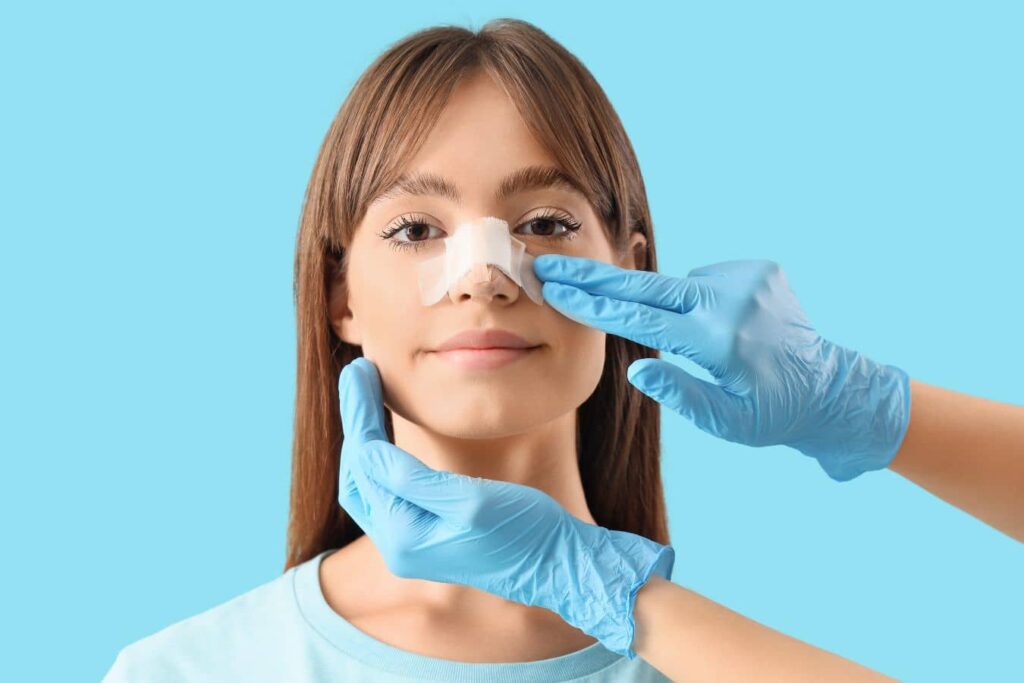
Congestion is the part people underestimate, since you cannot breathe freely through the nose yet. Cold compresses around the eyes ease the swelling, and rest makes the day more comfortable.
Your First Month After Revision Surgery
The First Week
The first week is the most eventful stretch of the recovery process. Swelling and bruising around the eyes peak around day two or three, then begin to fade. The splint usually stays on for about a week, and most patients take that time off from work. Pain is generally milder than people expect, and what discomfort there is tends to come more from congestion than from soreness. I see patients during this week to remove the splint and check the healing tissues.
Week Two
Once the splint is off, the nose looks swollen but recognizable. Bruising has usually faded enough to cover with light makeup, and many patients feel comfortable returning to desk work and quiet social plans. The tip stays firm and swollen, which is completely normal this early. I ask patients to keep avoiding anything that raises blood pressure or risks a bump to the nose.
Weeks Three and Four
By the end of the first month, the obvious signs of surgery have mostly settled, and people who do not know about the procedure often will not notice. Underneath, though, swelling is still present in the lower third of the nose. The nose looks good now, but it is far from its final shape.
Revitalize with Dr. Frankel
Step into a world where beauty blends with science, and let Dr. Frankel guide you to a refreshed, youthful appearance.

Month-by-Month After Revision Rhinoplasty
Month Two
Around the second month, you can usually return to light exercise and a more normal routine. The bridge looks refined and daily swelling keeps fading, though the tip remains the slowest area to settle.
Months Three to Six
This is when results start to feel real. Most of the swelling is gone, breathing typically improves as internal healing finishes, and the nose starts to look like the result we planned. Subtle changes still happen, especially in skin that was thick or scarred from earlier work.
Months Six to Eighteen
The final refinement plays out over the better part of a year, and sometimes longer in heavily revised noses. I always tell patients that the last bit of tip swelling is the most stubborn, so the nose they see at six months will keep improving past that point.
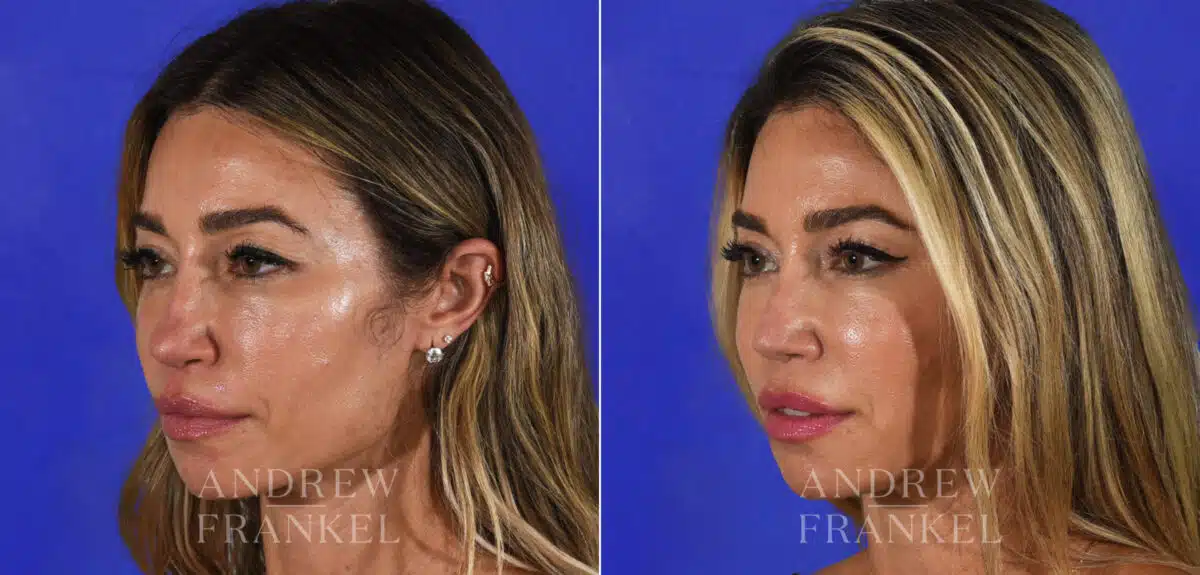
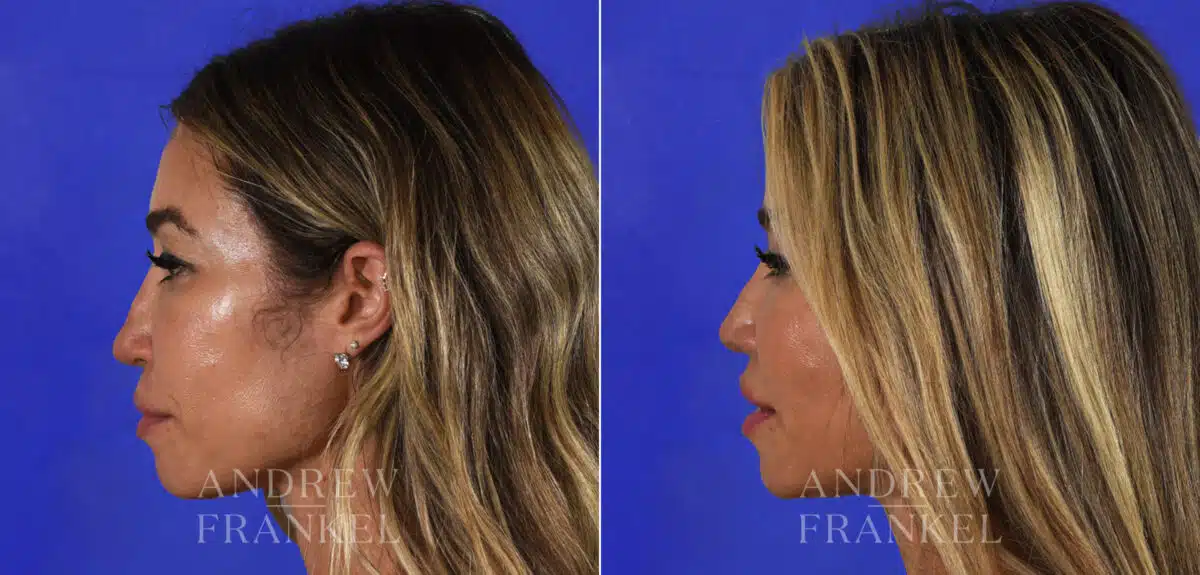
One patient case shows this timeline well. She came to me after two previous rhinoplasties, unhappy with several irregularities and the shape of her nasal tip. I performed a revision using cartilage harvested from her chest wall to add support and rebuild areas that had lost it, including a supratip depression. During surgery I also found persistent Radiesse filler in the skin of her bridge, which had left a thickened region. As I noted at the time, “Radiesse is a non-dissolvable filler that can be challenging to remove safely without causing skin damage.” We added a subtle upper eyelid lift to complement the result, and her before and after photos were taken thirteen months apart. Both of us were very pleased with how it healed.
When to Call Your Surgeon
Most recoveries are smooth, but it helps to know which signs deserve a call. Reach out to your surgeon if you notice a fever, heavy or ongoing bleeding, sudden swelling on one side, pain that increases after the first week rather than easing, or any unusual drainage or redness. None of these are common, and calling early almost always makes them easier to manage.
How to Support Healing After Revision Rhinoplasty
A few simple habits make a real difference in the weeks after surgery.
- Sleep with your head elevated for the first couple of weeks to help keep swelling down.
- Stay out of direct sun and protect the skin, since fresh tissue is sensitive.
- Avoid smoking entirely, because it slows tissue repair and raises the risk of complications.
- Hold off on strenuous exercise and contact activities until you are cleared.
- Follow your post-operative care instructions closely, and be gentle with nasal care.
More than anything, give it time. That slow final stretch is part of getting a natural look that lasts for years.
Schedule a Consultation in Beverly Hills
If you are considering a second opinion or a revision, the best next step is a conversation about your nose and your goals. Call our Beverly Hills office at 310-552-2173 or request a consultation through our contact page.
Frequently Asked Questions
About Dr. Andrew Frankel
Dr. Andrew Frankel is a double board-certified facial plastic surgeon who has run a boutique practice in Beverly Hills for more than twenty-five years. He is certified in both Facial Plastic and Reconstructive Surgery and Otolaryngology-Head and Neck Surgery, and his work is devoted entirely to the face and neck. A member of the American Academy of Facial Plastic and Reconstructive Surgery, he also serves as a Fellowship Director, training the next generation of facial plastic surgeons, and he is widely regarded for taking on complex revision rhinoplasty cases.